Youth Connect is our new online hub that brings together youth voice activity from across the Humber region. It features a database and interactive map, a repository of youth voice reports and a tool that allows you to explore engagement findings, identify recurring themes and access evidence from a wide range of sources.

Chloe Hunter, our Youth Voice Research Assistant, worked closely with Eski to develop Youth Connect. We spoke to Chloe about her experience with the project and recommendations for using the resources in grant applications and decision making.

What was your role in developing Youth Connect?

On my first day at the Humber VPP, I helped review tenders to decide who we should commission to lead the project. I also assisted with the research interviews to gather insights from a range of organisations in the Humber region that had already collected youth voice activity. 

Throughout the project, there were many conversations about what our output would be. We knew that we needed a search function and a place to hold resources, as well as a map and database that could be used to highlight organisations collecting youth voice research. In the end, we came up with 'Youth Connect' - an online hub that includes everything we wanted to feature, such as a Gemini Notebook search tool, which allows users to ask specific questions and gain a summary from the reports.

What motivated you to work on Youth Connect?

As a young person from the local area, I know how often our voices feel unheard. I don’t remember ever being asked my views or thoughts on topics which affected my day-to-day life. So to help create a platform where young people's opinions can be heard was a fantastic opportunity.

Youth Connect aims to help organisations and providers use the evidence to plan youth activity and highlight any gaps in the research which they feel they could fill.

I also have a little one myself, and knowing how the world is changing so quickly can be daunting as a first-time parent. That's why providing young people with a place for their voices to be heard felt important. It gives me great pride to facilitate change in a system that will use the voices of young people in the decisions which impact their lives.

Why is it important to bring existing youth voice reports together in one place?

Many organisations in the Humber region are collecting vital data and insights from young people. However, it is often mentioned that data sharing is difficult, which results in the duplication of work.

Consultation fatigue was a key theme highlighted by young people – they want to see that changes are made, rather than being asked questions in a tokenistic manner. By making Youth Connect the shared space for youth voice resources across the Humber region, users can access the insights without needing to consult young people on the same topics again and again. It also highlights any cohorts whose voices aren’t being heard, to help organisations direct future youth voice research and strategic planning.

How do you hope Youth Connect will influence practitioners, educators or partners working with young people?

My hope is that Youth Connect will allow practitioners to plan their sessions around topics which are relevant to young people based on the collated reports. As reports are added, it will also highlight missing cohorts and topics. This will help to direct future research around new themes and with cohorts whose voices aren’t being heard.

I also hope that Youth Connect helps practitioners when applying for funding and grants to support their work, while encouraging joined-up working in local areas.

Can you give an example of how someone might use Youth Connect to shape a project, intervention or strategy?

If applying for a funding grant to create a safe space for young people (such as a youth hub), practitioners can use our Gemini Notebook search tool to find out what young people thought about a safe space in their area. For example, asking “What do young people in Hull say about safe spaces?”. From here, the practitioner can use the provided summaries to support their grant application - as well as finding relevant references and sources to evidence this application further.

The greatest benefit of this tool is to reduce the time spent by practitioners reading reports to find evidence, and allow for more time to provide young people with the support they need.
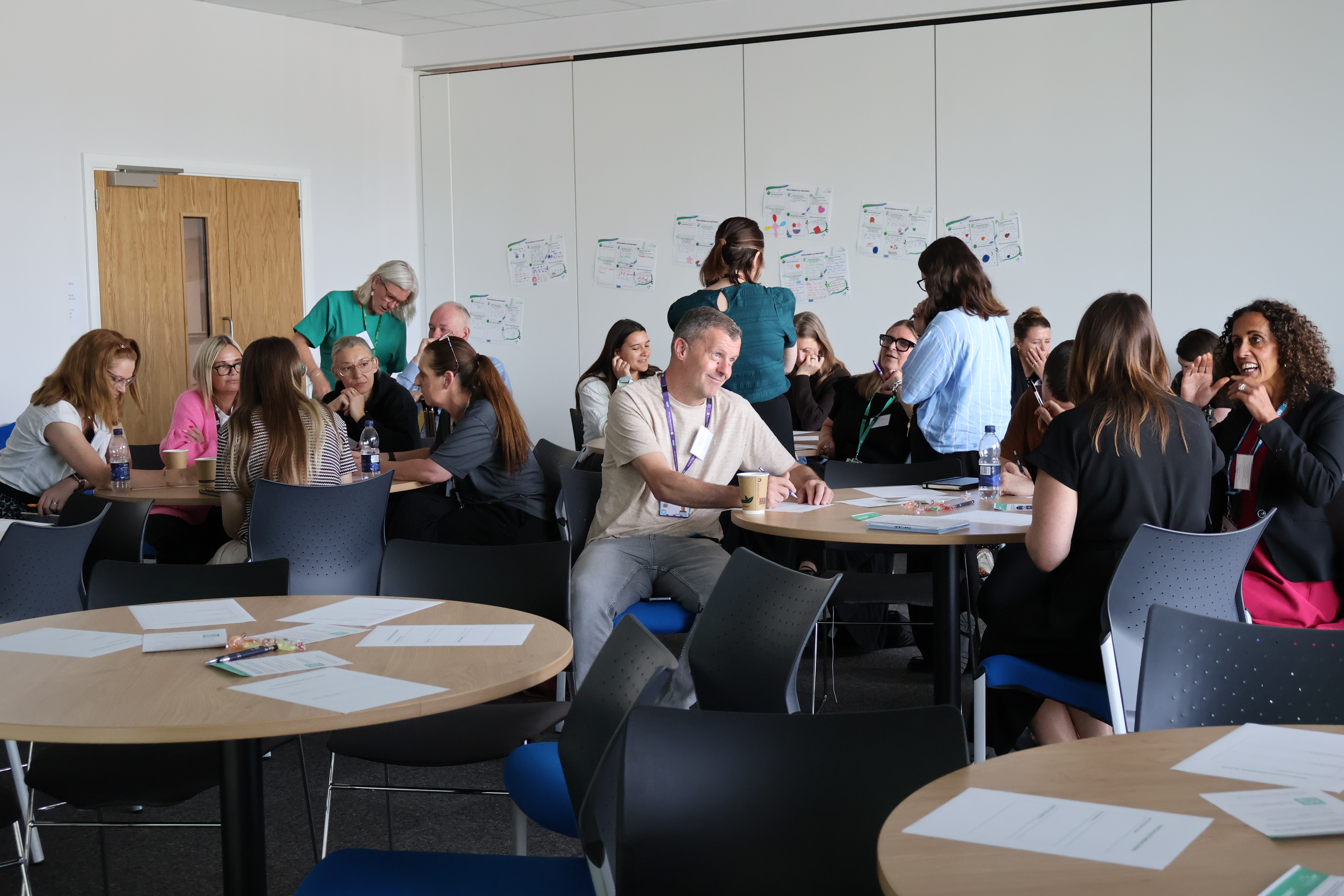
Youth Connect Workshop 1

(Above: Attendees give feedback on Youth Connect at the Humber VPP's Partnership Conference 2026)

What are some of the most striking things young people have said about safety and violence in their community?

Something which struck me was that online conflict frequently spills into offline spaces. Beats Bus' research suggested that social media makes violence and conflict (that you could previously walk away from) inescapable. Young people don’t see the online and offline world as two separate places - they often see just one world. Therefore understanding the level of fluidity where harm can travel between the two helps us understand the constant pressures that those who are experiencing violence are under.

Was there a particular insight that stayed with you?

One finding which I found particularly interesting was that young people with SEND (special educational needs and disabilities) or neurodiversity also want a safe space to go and visit. Though it is important to note that these young people don’t want separate provisions - they would rather current provisions have accessible features to suit their needs to allow them to be included rather than isolated.

Why is it important for partners to keep submitting new youth voice research?

Youth Voice insight is ever changing. Current trends show that online harm is a priority at the moment, while previously this wasn’t considered. Therefore, new data will keep session delivery and planning relevant to the current landscape.

More reports and findings also means richer and more specific answers from our Gemini Notebook tool.

How should someone new to youth voice research start using the resources?

If someone is new to youth voice research, Youth Connect would be a great place to start! They can look at the directory database and map tool to highlight other organisations in their local area that they can connect with.

They can also use the Gemini Notebook tool to highlight key themes from young people in the local area and even find out any missing local data. From here they can use this information to begin their work with young people by filling in gaps of underrepresentation and missed topics.

What did young people say about consultation fatigue and how does Youth Connect respond to that?

Young people are often experiencing consultation fatigue when youth voice research takes place – they are often asked the same questions repeatedly and see nothing happening as a result of these discussions.

They want to be part of the solution, not just the consultation. When they have these conversations, they want to see that their time is valued, their insight is appreciated and that any progress is reported back. The key point made by young people is that practitioners and those carrying out consultation have to close the feedback loop and share the impact of the discussions.

For example, when Eski spoke with individuals in the youth justice teams, Eski returned to the young people with updates and a plan of action for the next steps, keeping them in the loop.

What challenges did you face when pulling together youth voice research?

As we progressed through the project we knew we had to create something, but we weren’t exactly sure what that something should be. Therefore, when we were explaining the project to organisations, it was difficult to explain as we weren’t sure what the end product would look like. It's hard to sell a product that doesn’t yet exist, so getting organisations to buy in was difficult.

Often organisations are stretched for time, and to take part in a 45-minute conversation is a challenge. Humberside is also a huge region with costal, urban and rural areas, so engaging small-scale cohorts can be particularly difficult.

Sometimes, pieces of information were being gathered anecdotally, and practitioners didn’t know what to do with the data. This highlighted the next step for us: to create some outputs to help organisations report youth voice and ensure insights are used to shape the future and allow for further inputs into Youth Connect.

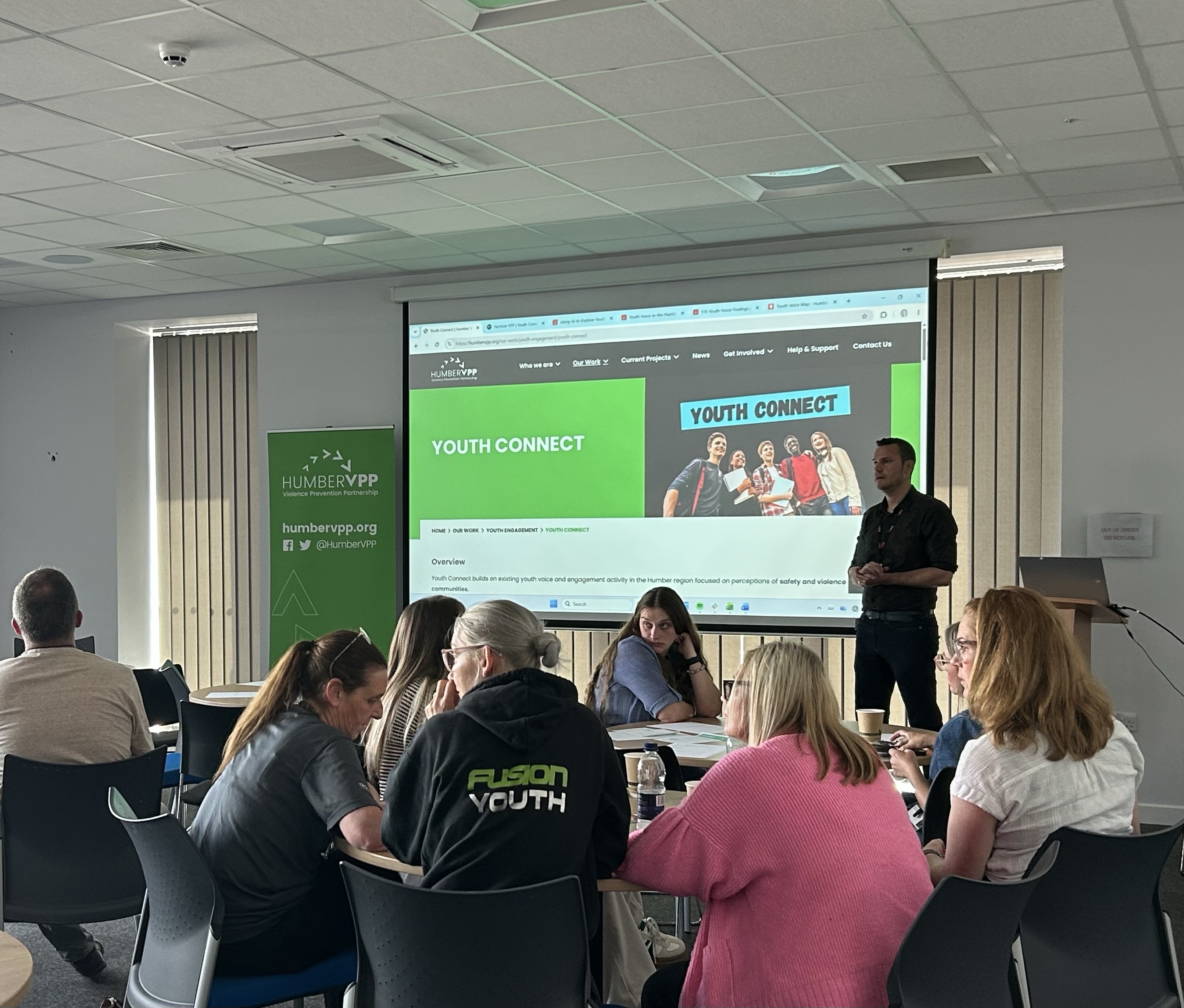
VPP Con 26 Youth Connect

(Above: Eski present Youth Connect at the Humber VPP's Partnership Conference 2026)

How did you work with Eski and what did the partnership bring to the final project?

The Humber VPP and Eski worked as a team throughout the project, regularly meeting to consult on progression and bring forward any ideas or hurdles we had come across.

Our team had a range of knowledge and experience, including media campaigns, education, management and understanding the accessibility for young people. Working together helped us to understand different views and allowed us to create a product that was accessible and relevant for organisations, community groups and individuals working with young people.

Exit website