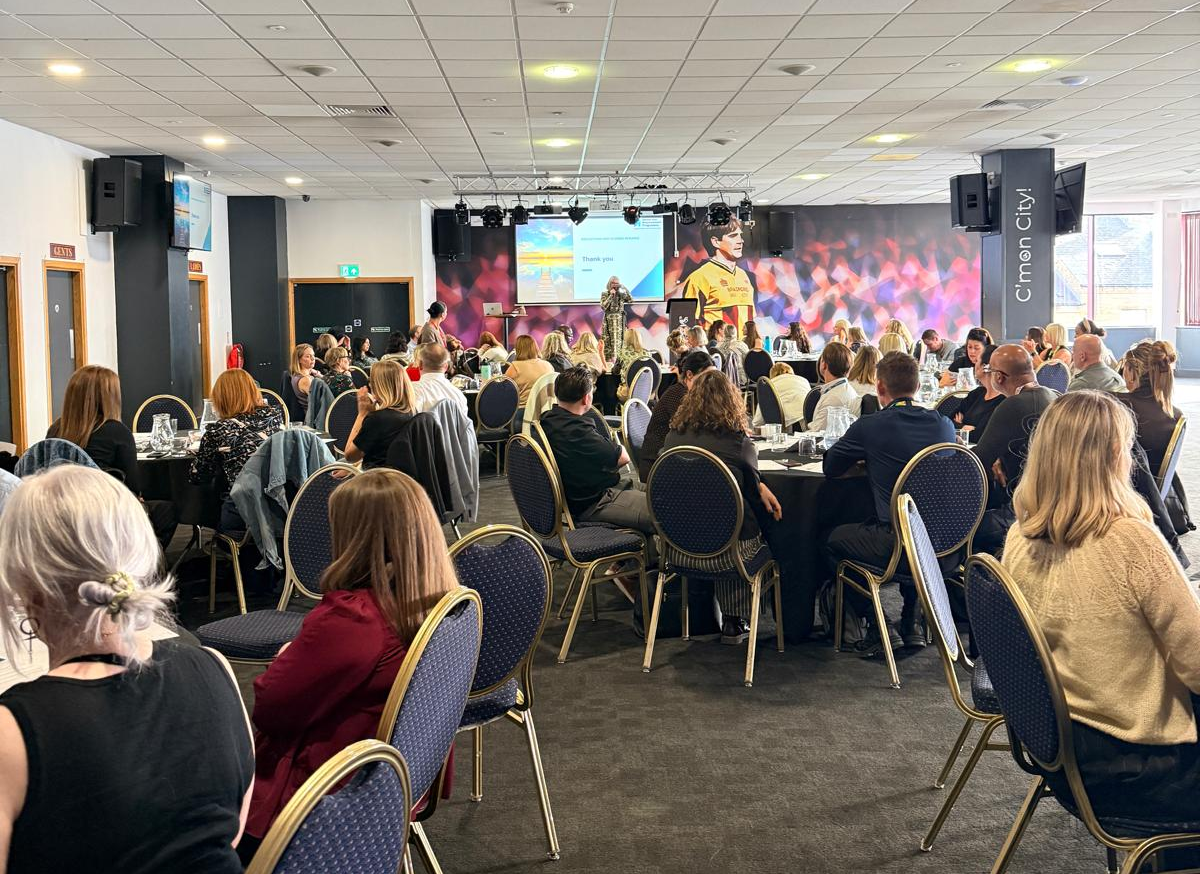
Hull played a key role at the regional Early Help Practice Showcase Conference in Bradford, with local experts spotlighting the city's innovative approaches to early intervention through the Young Futures Panel and Hull Under 10 Model.
Held at Bradford City Football Club on the 24 September 2026, the event was organised by the Yorkshire and the Humber Sector Led Improvement Programme with support from Families First Transformation Network. The conference brought together nearly 90 professionals from seven local authorities, alongside representatives from policing, education, health and the voluntary, community, faith and social enterprise sector.
Justine Mortimer (Neighbourhood Nuisance Manager at Hull City Council) and Rachel Roberts (Strategic Lead for Early Help and Prevention at Hull City Council) joined other expert speakers to share examples of pioneering practice.
Their presentation explored how the Humber Violence Prevention Partnership (VPP) supports the development and delivery of Hull’s Young Futures Panel, bringing partners together to identify children at risk of serious violence at the earliest opportunity and coordinate targeted support to improve outcomes for children, young people and families.
Justine said: “The conference provided an excellent opportunity to share Hull's approach to early intervention and prevention.
“It was particularly valuable to highlight the work of the Young Futures Panel and our focus on the under-10 cohort, where partners are working together to identify emerging needs at the earliest opportunity. By intervening early, supporting families and coordinating services around children, we can help improve outcomes, prevent escalation and give young people the best possible start in life.
“The strong level of engagement throughout the conference demonstrated a shared commitment across agencies to delivering effective early help and building safer, stronger communities.”
The Home Office introduced Young Futures Panels in 2025. Violence Reduction Units across England and Wales were provided with funding to pilot the approach in 2025/26 and 2026/27. Following a successful application, Hull City Council was selected to pilot the panel in Humberside. The Humber VPP – the regional VRU - is providing access to £400,000 of government funds to support the set up and running of the panel over the two years.
A key focus of the presentation was Hull's expanding work to identify and support children before issues escalate. Through the Young Futures Panel, partners from policing, children's services, education and other agencies work together to identify children displaying concerning behaviours and ensure they receive timely, tailored support.
Hull City Council’s Portfolio Holder for Communities and Community Safety, Councillor Ted Dolman, said: “The Young Futures Panel is particularly important in Hull where stakeholders working together share a collective responsibility for safeguarding and improving the futures of young people.
“The tailored support offered means that children and young people who might otherwise be at risk of being encouraged to go down the wrong path can instead be helped towards better life outcomes.
“It’s really pleasing that this approach has been showcased to those involved in similar work across our wider area.”
With assistance from the Humber VPP, Hull City Council has developed a pioneering approach focused on children below the age of criminal responsibility. Analysis found that many under-10s involved in offending were also experiencing significant vulnerabilities, including neglect, domestic abuse, parental criminality, substance misuse in the home and poor school attendance. This evidence informed the creation of a dedicated pathway to provide preventative support at a much earlier stage.
Jonathan Evison, Chair of the Humber VPP, said: "We are proud to see Hull's innovative approaches being recognised and shared with partners from across Yorkshire and Humberside. The Young Futures Panel demonstrates the difference that can be achieved when organisations work together to identify vulnerability early and provide coordinated support for children and families.
"Preventing serious violence requires a long-term commitment to early intervention, collaboration and evidence-informed practice. By sharing what works and learning from one another, we can strengthen our collective response and help more children and young people."
Rather than focusing solely on behaviour, the approach works with children and their families to address wider needs through age-appropriate interventions, parenting support, emotional wellbeing programmes and connections to specialist services. This whole-family, trauma-informed model aims to improve life chances, strengthen resilience and reduce the likelihood of future involvement in violence or crime.
Feedback from delegates was overwhelmingly positive, with attendees recognising the value of approaches that improve early intervention, multi-agency collaboration and the prevention of serious violence. The event also provided an opportunity for partners across Yorkshire and Humberside to share learning, strengthen relationships and explore how successful approaches can be adapted within their own areas.
Explore examples of how the Young Futures Panel is helping young people and their families on our case studies page.